
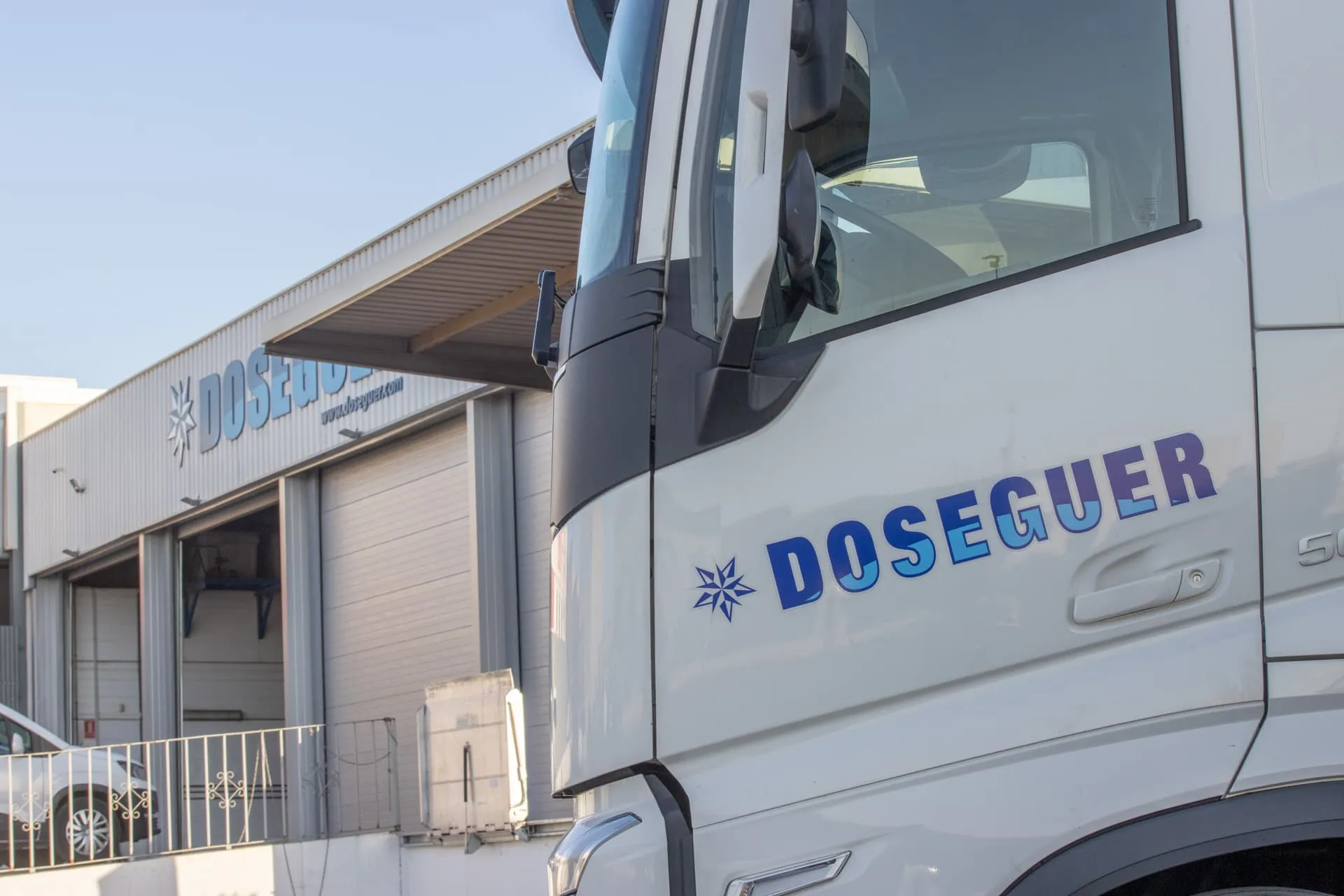
Built into our customers' logistics
We know how much the delivery of your product matters, and we work to achieve genuine integration with our customers' logistics, turning transport into a competitive advantage through our storage and distribution service.
Our facilities include a loading and unloading bay, and put at our customers' disposal 1,100 square metres of covered storage, 1,500 of APQ storage and 5,000 square metres outdoors.
Storage and distribution are essential parts of any logistics chain: how efficient they are is often the difference between an operation that flows and one that gets stuck.
What each one is
Storage is the process of keeping goods in a given space until they are needed for distribution or sale. Its aims are to make the most of the space, cut operating costs and keep the goods accessible and secure.
Distribution is the movement of those goods from the warehouse to the end consumer, with the aim of shortening delivery times, minimising costs and keeping the customer satisfied.
Depending on how many intermediaries sit in between, distribution can be direct — from manufacturer to consumer, with nobody in between —, short, with one or a few, or long, when the product passes through several hands before reaching its destination.
Types of warehouse
Not all goods call for the same space or the same treatment:
Takes any kind of goods that do not require special conditions.
For perishable or hazardous goods, under whatever conditions each case demands.
For goods in international transit, awaiting clearance.
For large inventory volumes with a continuous flow out to destination points.
Temporary storage before final distribution, useful for fast-moving goods.
Direct transfer from the incoming vehicle to the outgoing one, cutting warehouse time to a minimum.
From the inbound bay to the final delivery
In the warehouse, what makes the difference is making the most of the space — efficient use of shelving and racking —, inventory management with constant monitoring to avoid both overstock and shortages, and the maintenance and security of both the goods and the facilities themselves.
In distribution, the key lies in route optimisation, in fleet management and in integrating the systems that coordinate orders and transport, so that every shipment leaves when it should and arrives when it must.
What our service covers
Why choose Doseguer for your storage?
7,600 m² across covered warehouse, APQ zone and outdoor space, with a loading and unloading bay.
1,500 m² licensed for chemical product storage, which is rare in the province.
We fit into the customer's way of working rather than making them adapt to ours.
The same operator stores the goods and delivers them: one point of contact, no handovers.
Outsourcing the warehouse avoids tying up capital and frees you to focus on your own business.
Space and service adjust to the changing needs of each season.
Our facilities
A covered warehouse, a licensed APQ zone and a large outdoor area, all with direct access to the loading and unloading bay.
Storage and distribution across Spain
We operate from our facilities in Almería with distribution throughout Spain. Ask us about the options for each destination.
Frequently asked questions
What are storage and distribution?
They are two critical parts of the supply chain. Storage is the process of keeping goods in a safe, organised place until they are needed; distribution is the transport of those goods from the warehouse to their final destination, whether that is the customer or a point of sale.
What is the storage and distribution cycle?
It covers every stage from the arrival of goods at the warehouse to their final delivery: goods reception, storage, inventory management, picking, packing and distribution. Each stage determines whether the goods stay in good condition and arrive on time.
What is the difference between storage and logistics?
They are related but distinct. Storage focuses on managing and physically holding the goods. Logistics is broader: it includes storage, but also the planning, implementation and control of the flow of goods, services and information from the point of origin to the point of consumption.
What does storage include?
Goods reception, inspection and quality control, sorting, placement on shelving or in designated areas, inventory management, picking, packing and preparation for distribution — all so the product stays in optimal condition and is ready to go.