
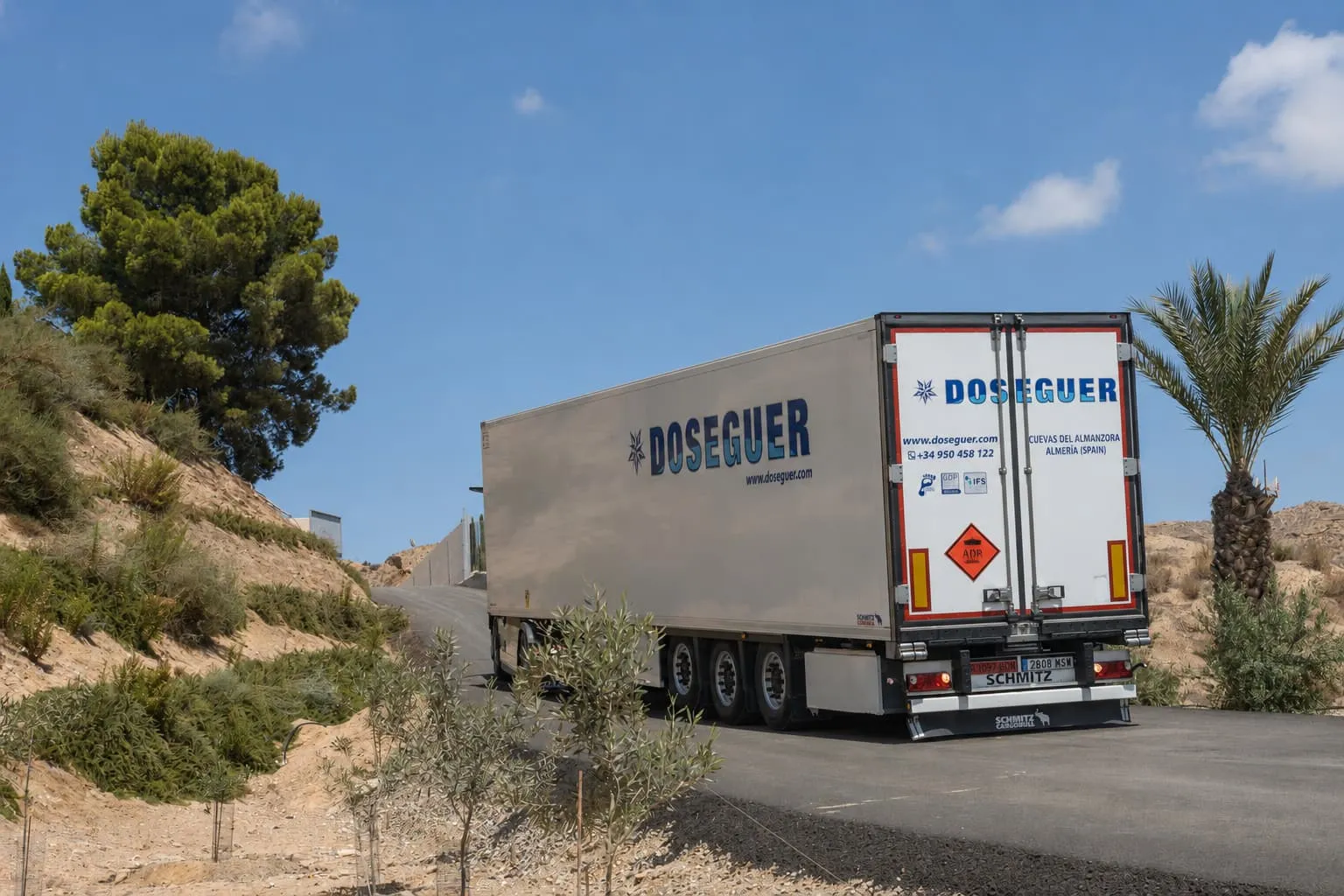
Training and accreditation for hazardous goods
Our people hold the demanding training and accreditations required for ADR transport — that is, the transport of hazardous goods.
On every job we check everything the ADR Agreement requires, so that both our team and our equipment have what they need and the transport is carried out with full safety guarantees.
We also have a Safety Adviser and liability insurance for this type of transport.
What is ADR transport?
The European Agreement concerning the International Carriage of Dangerous Goods by Road, known as ADR, is an international treaty regulating the carriage of hazardous goods by road. It was adopted in 1957 and is revised every two years to keep the transport of these materials safe and efficient.
It has two aims: to make safe transport possible, with clear and uniform guidelines, and to minimise the risks to people, the environment and property during the journey.
The rules are revised every two years by working party WP.15 of the Inland Transport Committee of the UNECE, taking in technological advances, new industrial procedures and UN recommendations. They apply across the 49 countries party to the agreement, most of them European, each through its own national legislation.
The 9 classes of hazardous goods
ADR sorts hazardous goods into nine classes, each with its own packaging, labelling and documentation requirements:
Explosive substances and articles, subject to the strictest handling protocols.
Compressed, liquefied or dissolved gases under pressure.
Fuels and solvents that ignite easily.
Flammable solids, substances liable to spontaneous combustion and those that emit flammable gases on contact with water.
Oxidising substances and organic peroxides, which feed combustion.
Toxic substances and infectious materials, with restricted handling.
Radioactive materials, subject to specific authorisations and controls.
Corrosive substances that attack materials and tissue.
Hazardous substances and articles that do not fit the other classes.
What moving hazardous goods requires
Every ADR shipment needs its paperwork in order: the ADR transport document, setting out the nature of the goods carried; the instructions in writing, which are the guide for action in an emergency; and the driver's training certificate.
Then come marking and labelling, with standardised plates and symbols identifying the type of hazard, and packaging and securing: containers robust enough to prevent spills, and loads fastened so they cannot shift in transit.
Drivers train at approved centres, covering both theory and practice, and obtain the ADR licence after passing an examination. The certification is valid for five years and is renewed through refresher courses.
What we check before every departure
Why choose Doseguer for your ADR transport?
Drivers with valid ADR licences and continuous training at approved centres.
An in-house role overseeing compliance with the Agreement across the whole operation.
Specific cover for the transport of hazardous goods.
Before each departure we verify every element ADR requires, in both people and equipment.
Vehicles kept ready for the periodic inspections the regulations demand.
We handle the extra paperwork and coordination needed to cross borders without incident.
Our ADR fleet
Vehicles equipped and marked in line with the ADR Agreement, carrying the safety devices and emergency equipment each class requires.
ADR transport across Spain
We operate from Almería with national and international coverage for hazardous goods. Ask us about the options for each destination.
Frequently asked questions
What does ADR mean in transport?
It stands for «Accord européen relatif au transport international des marchandises Dangereuses par Route», the European agreement on the international carriage of dangerous goods by road. It sets the rules for moving hazardous materials on European roads, with the aim of minimising risks to people and the environment.
What can be carried under ADR?
A wide range of hazardous goods, classified by their level of risk: chemicals, gases, flammable liquids, radioactive materials, toxic and corrosive substances, among others. Each type has its own packaging, labelling and documentation requirements.
When is ADR compulsory?
Whenever hazardous goods are carried in quantities above the thresholds set by the regulations, on both national and international journeys within the countries party to the agreement. The companies and drivers involved must hold the required licences, certifications and training.