
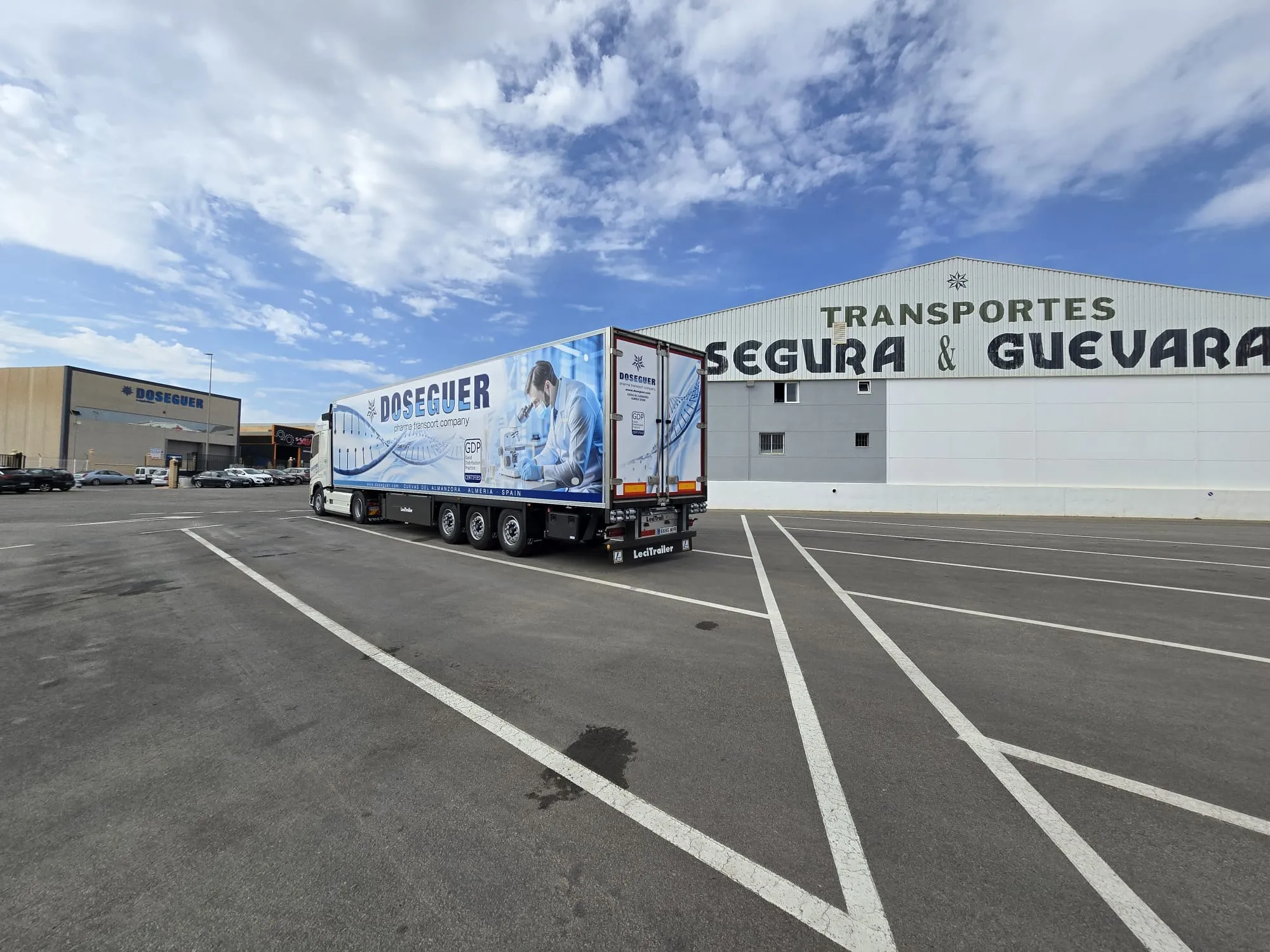
A link in the chain that cannot fail
At Doseguer we distribute pharmaceutical products under GDP good practice, with continuous temperature logging from loading to delivery.
Pharmaceutical transport is crucial within the logistics chain, because it determines whether a product intended for human consumption arrives in perfect condition. That means holding the temperature, guaranteeing traceability and keeping the goods secure at every stage.
Its challenges are its own: temperature control, preventing falsified medicines and complying with particularly strict regulations. None of that holds up without qualified professionals and specialised vehicles.
Regulations and good practice
Good Distribution Practice (GDP) is the body of rules that guarantees quality and safety in the distribution of medicines. It governs equipment, documentation, transport and temperature monitoring.
European legislation, transposed in Spain through Royal Decree 782/2013, requires pharmaceutical transport operators to have a sound quality system for assessing and mitigating risks across the distribution chain.
On top of that comes Directive 2011/62/EU, in force since 2019, with measures against falsified medicines: safety features on packaging that make it possible to verify a product's authenticity and detect tampering.
Vehicles and temperature equipment
Every product demands its own range, and every range its own vehicle:
Insulated walls that dampen heat exchange and hold the temperature throughout the journey.
Adds an active system that brings the internal temperature down and keeps it within the agreed range.
For products that need demanding, stable cold along the whole route.
The range the equipment must cover depending on the product, including goods that must not get too cold.
Temperature monitored from origin to destination
Temperature control is essential to guarantee that a medicine remains effective and safe. Leaving in good condition is not enough: it must be monitored continuously from the point of origin to the final destination, and recorded.
That record is also the basis of the documentary traceability the regulations require, and what allows a fast response if anything drifts out of range en route.
What we guarantee on every shipment
Why choose Doseguer for your pharmaceutical transport?
Distribution in line with the rules governing equipment, documentation and temperature.
Procedures to assess and mitigate risks across the distribution chain, as Royal Decree 782/2013 requires.
Temperature monitored and recorded throughout the journey, not just at origin and destination.
Specific training in handling, storing and transporting pharmaceutical products.
Real-time tracking and complete shipment documentation at your disposal.
Defined roles across the chain, from document management to handling and delivery.
Our fleet for pharmaceutical products
Vehicles with heating and cooling equipment able to hold the range each product calls for, with continuous logging of conditions.
Pharmaceutical transport across Spain
We operate from Almería with national coverage for pharmaceutical and healthcare products. Ask us about the options for each destination.
Frequently asked questions
How are pharmaceutical products transported?
In vehicles with temperature and humidity control, which keep the goods within the right range to preserve their integrity and effectiveness. Hauliers must comply with strict regulations and be trained in handling sensitive products, and real-time monitoring is used to check that conditions stay within the established parameters.
What is transport in pharmacology?
It is the methods and processes used to move medicines and pharmaceutical products from the place of production to the place of distribution or consumption. It may combine road, air and sea transport, and in every case it must meet specific regulations guaranteeing the safety and effectiveness of the product in transit.
What should the transport of medicines be like?
It must take place under controlled conditions that ensure the stability and effectiveness of the product: vehicles with temperature and humidity control systems, special packaging that protects against light and contamination, and constant monitoring throughout the process. The staff involved must be trained and comply with the regulations in force.
Which document matters most for transporting medicines?
The main one is the Good Distribution Practice (GDP) guideline, which sets the standards and requirements for transporting medicines safely and effectively. Depending on local regulations and the type of product, quality certificates, packing lists and temperature records may also be required.